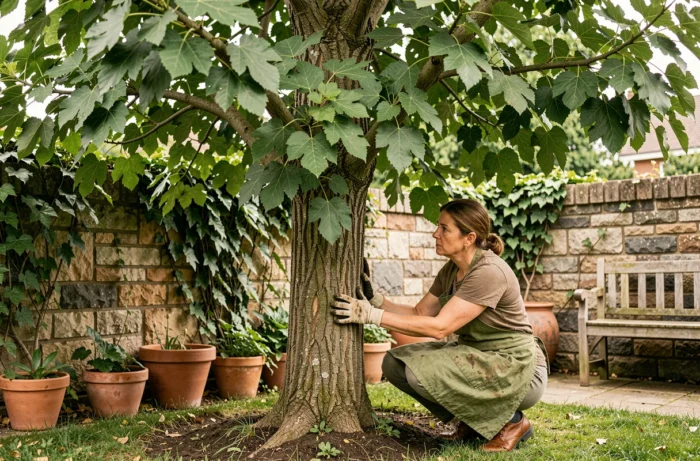
A mulberry tree (Morus kagayamae) that has been planted for several years without producing a single fruit poses a problem that is rarely solved by patience. The most common cause is neither the soil, nor the exposure, nor the watering: it is often the cultivar itself that is genetically sterile.
Sterile cultivar or labeling error: the diagnosis that no one makes first
Nurseries market two main categories of mulberry trees. The first includes fruiting forms, capable of producing fleshy mulberries. The second corresponds to the so-called “Fruitless” cultivars, selected for their dense foliage and umbrella-like shape, without any fruiting.
The cultivar Morus kagayamae ‘Fruitless’ is specifically sold to shade terraces and gardens without making the ground dirty. It will never produce fruit, regardless of the quality of your care. If your tree matches this variety, the diagnosis stops there.
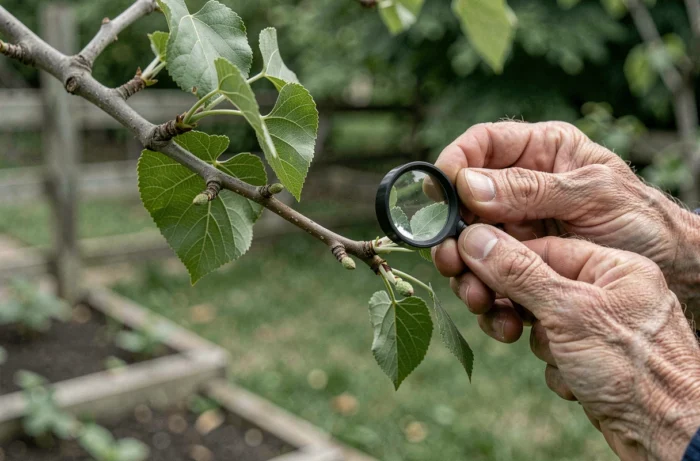
We regularly observe a second problem: labeling errors in nurseries. A subject sold as fruiting may actually be a sterile form or a different cultivar than advertised. Before any further investigation, it is essential to determine whether the edible fruits of the mulberry tree were actually expected on the acquired plant. Check the original label or contact the supplier with a photo of the leaves and bark.
Pruning the mulberry tree: umbrella shape versus fruiting
Pruning is the second technical factor we encounter most often. A mulberry tree shaped like an umbrella for shade undergoes severe cuts that remove fertile wood every year. Fruits form on the branches of the previous year. Therefore, drastic pruning at the end of winter or in spring eliminates the potential for fruiting for the following season.
Excessive pruning reduces fruiting the following year, or even completely cancels it. For a fruiting subject, we recommend moderate pruning:
- Remove dead, crossed, or poorly oriented branches without systematically shortening the branches that bear fruit buds
- Thin out the center of the crown to allow light to penetrate, which is essential for the maturation of the mulberries
- Perform the pruning at the end of winter, before bud break, while keeping the short lateral shoots that will bear the harvest
If the main goal remains shade on a terrace, one must accept that fruiting will be sacrificed. The two objectives are difficult to reconcile on the same subject.
Late spring frost and aborted flowering of the mulberry
The mulberry tree buds relatively late compared to other fruit trees, which partially protects it from spring frosts. However, in some regions, a late frost episode during flowering is enough to destroy the flowers before fruit set.
Flowers damaged by frost will produce no fruit, even if the tree resumes normal growth a few weeks later. The foliage develops without issue, which masks the damage. The gardener notices the absence of fruit in summer without linking it to a frost that occurred in spring.
We recommend noting the flowering dates and frost episodes in your region each year. If the correlation is confirmed over two or three seasons, a light protective cover placed over the crown during risky nights may be enough to save the harvest.

Water stress and overheated soil: a factor exacerbated by recent climate
A mulberry tree planted in full sun on bare or paved soil experiences thermal stress that its shallow roots handle poorly. During periods of intense heat, bare soil heats up quickly and reduces root absorption. The tree may then sacrifice fruiting to concentrate its resources on the survival of the foliage.
This phenomenon worsens in gardens in southern France where dry summers extend. The mulberry tree tolerates drought once well established, but fruiting requires a more regular water supply than mere vegetative survival.
A thick mulch at the base of the tree (wood chips, straw, shredded material) limits the soil temperature rise and maintains sufficient moisture at the level of the shallow roots. Deep watering every two weeks in summer, rather than frequent shallow watering, encourages denser rooting and better nourishment of the tree during the fruiting period.
Maturity of the tree and natural production alternation
A recently planted fruiting mulberry tree does not produce immediately. The tree first concentrates its energy on root development and the structure of its framework. The first significant harvest generally comes after several years of planting.
Even on an adult and productive subject, production alternation remains a natural phenomenon in mulberries: a year heavy with fruit may be followed by a nearly empty season. This biennial cycle is not abnormal and does not require any corrective intervention.
If your tree produced abundantly the previous year and yields nothing this season, alternation is the most likely explanation. Adding well-decomposed compost in autumn, spread under the crown without being buried, helps the tree rebuild its reserves for the following season.
The first reflex when faced with a fruitless mulberry tree is to identify the cultivar. If the variety is confirmed as fruiting, pruning and local climatic conditions are the two levers to examine first. Any other search for causes comes after these basic checks.