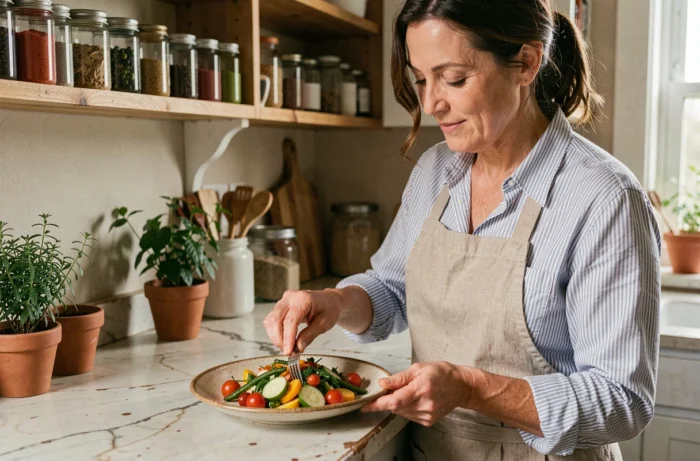
Generalist recipe platforms recycle the same seasonal bases without questioning the regulatory and technical changes that are reshaping cooking in France. Several structural changes, from sorting organic waste to reformulating products in large retail, are concretely altering what ends up on our plates. Following Cuisine Gratuite’s news allows you to capture these developments over time, with a more operational angle than the usual recipe compilations.
Sorting organic waste and reformulating menus: what is changing in professional kitchens
As of January 1, 2024, all food service professionals are required to sort their organic waste at the source to enable composting or anaerobic digestion. This obligation, stemming from the AGEC law, no longer concerns only large volumes: every establishment is targeted, regardless of its size.
The direct effect on culinary trends is measurable. Restaurants are optimizing their menus, reducing the number of items, and adjusting portions to limit leftovers. We are witnessing a rationalization that pushes chefs towards simpler dishes, built around fewer ingredients but with better mastery.
The AGEC law also sets a goal for reducing food waste compared to 2015: a deadline of 2025 for collective catering, 2030 for commercial catering. These milestones impose a gradual overhaul of service formats, from the weight of side dishes to buffet management.
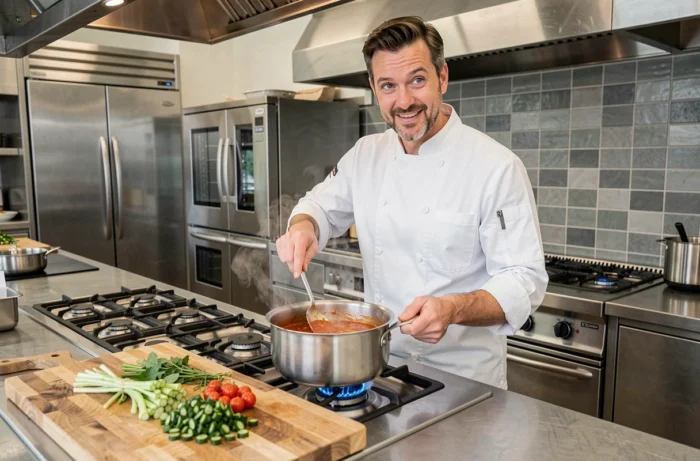
For amateur cooks, the consequence is tangible: the recipes circulating online increasingly incorporate a zero-waste logic. Peels transformed into broth, cooked greens, stale bread repurposed into breadcrumbs or pudding. This is no longer a passing trend but a direct response to a legal framework that permeates the entire sector.
Vegetarian meals in collective catering: a food transition inspiring home recipes
The rise of vegetarian menus in collective catering is one of the most significant culinary shifts in recent years. This movement, initiated by regulation since 2018, translates into an increased presence of plant-based proteins in school and corporate cafeterias.
We recommend not underestimating the ripple effect on home cooking. Families whose children discover dishes made with lentils, chickpeas, or tofu at school replicate these recipes at home. Culinary platforms that relay these trends, rather than limiting themselves to the classic meat-starch combinations, attract an audience seeking concrete vegetarian novelties.
The technical challenge lies in mastering textures and seasoning. A successful chickpea curry requires precise cooking, an acid-fat balance, and a choice of spices that cannot be improvised. Culinary content that details these technical points provides real added value compared to minimalist recipe cards.
Reformulated products in large retail: less salt, less sugar, new recipes to invent
Large retail has initiated a movement to reformulate its products, with public commitments to reduce salt, sugar, and artificial colorants. This shift directly alters the base of available ingredients for consumers.
- Industrial tomato sauces now contain less added sugar, which necessitates adjusting seasonings when used as a base for pizza or stews
- Stock cubes and dehydrated broths see their salt content decrease, changing the taste balance of soups and risottos prepared at home
- Reformulated cookies and pastries have different textures, drier or less crispy, requiring adjustments to dessert recipes using these products as ingredients
Adapting recipes to new formulations has become a culinary skill in its own right. A gratin that worked with a certain stock cube can become bland if the salt content has significantly decreased. Culinary news platforms that highlight these changes allow for anticipation rather than reaction.
Doggy bags and reusable containers: when regulation shapes new culinary habits
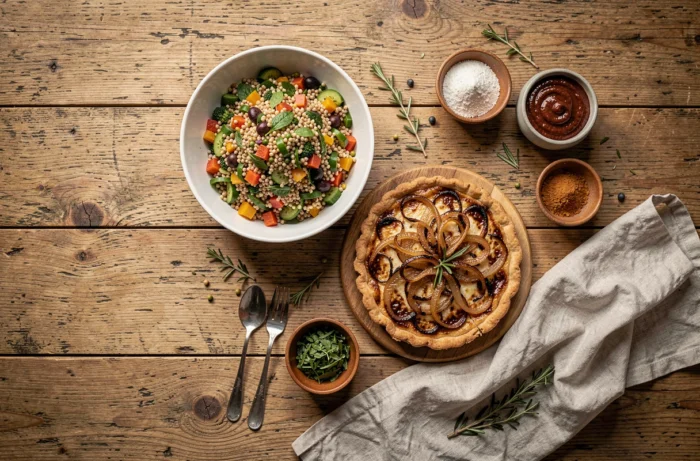
The doggy bag has become mandatory in all restaurants in France. Establishments must offer customers the option to take home their leftovers, and this obligation comes with constraints on containers: gradual ban on single-use plastic packaging in favor of reusable solutions.
For home cooking, this changes the game in two ways. First, leftovers brought home from the restaurant become a base ingredient for the next meal. Second, reusable containers require rethinking the packaging of pre-prepared dishes.
- Glass or stainless steel containers withstand reheating better and allow for leftover gratins without transferring containers
- Individual portion sizes are standardizing, making weekly meal prep easier
- Home vacuum sealing is gaining ground as a complement to rigid reusable containers
These regulatory changes are not trivial. They reshape daily actions in the kitchen, from storage to weekly meal planning.
Culinary monitoring: why generalist sources are no longer sufficient
Major recipe portals publish vast amounts of content, but their editorial model remains focused on listing recipe cards. Regulatory changes, industrial reformulations, and underlying trends such as the transition to plant-based proteins appear on the periphery, rarely as a central theme.
An effective culinary monitoring requires cross-referencing sources: regulatory news, feedback from collective catering, announcements from food industry players. It is in this space that true culinary innovations lie, those that sustainably change the way we cook rather than offering yet another variation of a seasonal recipe.
The coming months will be marked by the 2030 deadline for reducing waste in commercial catering and the continuation of reformulations in large retail. Keeping track of these developments over time remains the best way to adapt your cooking before changes impose themselves in the shopping basket.