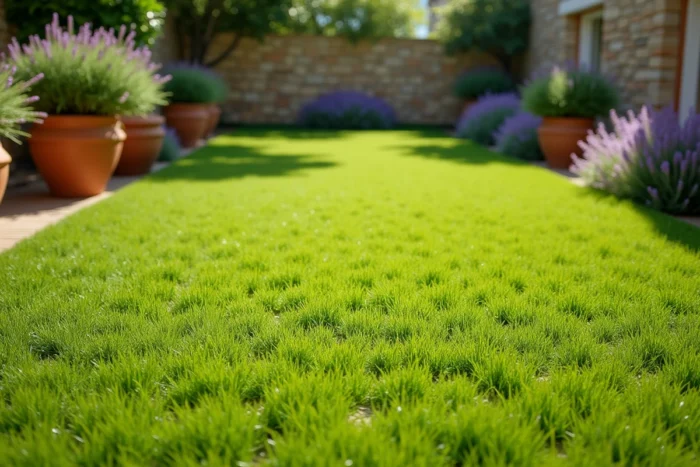
A lawn that turns yellow as early as June, despite regular watering, always raises the same question: is the problem due to maintenance or the initial choice? In a Mediterranean climate, the answer almost always lies in the type of grass. Prolonged drought, often calcareous or sandy soil, temperatures that easily exceed summer peaks, the classic grass sold in garden centers is not designed for these constraints.
C3 and C4 Grasses: Understanding the Difference Before Sowing
You may have noticed that some lawns remain green in the middle of summer while yours looks like straw? The reason is biological. Grasses are divided into two main families based on their photosynthesis method.
The so-called “cool-season” grasses (C3), such as ryegrass or meadow fescue, grow quickly in spring and autumn. They suffer as soon as the heat sets in. Their metabolism consumes a lot of water to maintain green foliage.
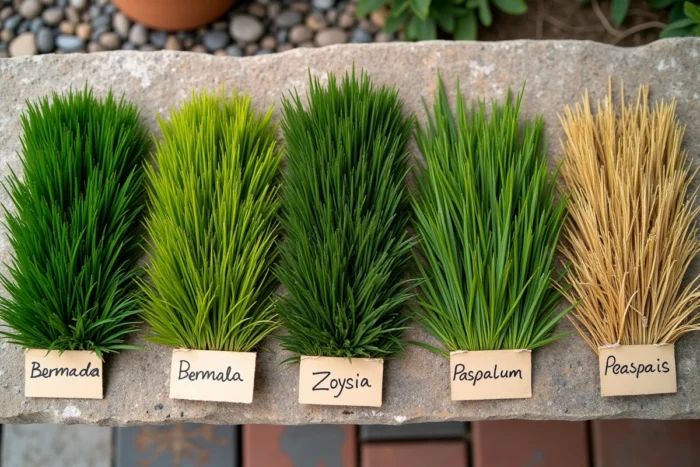
The “warm-season” grasses (C4), on the other hand, reach their peak growth in summer. Their photosynthesis works better under strong light and high temperatures. Bermudagrass (Cynodon dactylon), zoysia, and paspalum belong to this family. C4 grasses are the most suitable for very sunny Mediterranean gardens.
To delve deeper into the subject and identify available mixtures, it is useful to consult a guide on Mediterranean grass with Envies de Jardin before placing an order.
In practical terms, well-established bermudagrass can get through the summer without daily watering. It goes dormant (temporarily turns yellow) if the drought is extreme, then greens up again as soon as water returns. A tall fescue in the same situation risks dying outright.
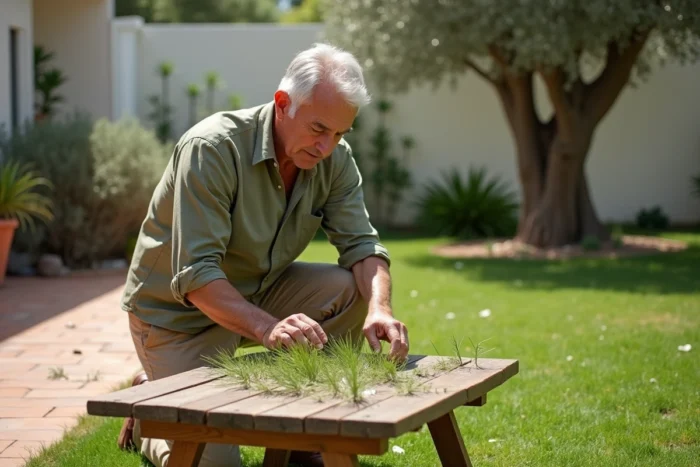
Tall Fescue, Kikuyu, or Bermudagrass: Which Grass for Which Garden
Choosing between these three options is not a matter of personal taste. It is a technical decision dictated by the soil, exposure, and how you use your lawn.
Bermudagrass and Paspalum for Sunny Areas
If your garden receives direct sunlight for most of the day, bermudagrass remains the reference. It tolerates foot traffic, roots deeply, and requires little water once established. Paspalum offers a similar appearance with better salt tolerance, making it relevant near the coast.
Both of these C4 grasses turn yellow in winter when temperatures drop. This dormancy is normal and temporary, but it often surprises gardeners used to permanent green.
Kikuyu: Resilient but Invasive
Kikuyu (Pennisetum clandestinum) survives with very little water thanks to particularly deep rooting. It grows quickly, covers the ground rapidly, and withstands heat without flinching.
However, kikuyu produces coarser foliage than fescues, which is not suitable if you are looking for a fine and neat appearance. It also tends to invade neighboring beds if not contained. And above all, it does not tolerate harsh winters well: in the hinterland where frost can last, it becomes risky.
Tall Fescue: The Compromise for Partially Shaded Areas
If your garden has shaded areas (walls, trees), pure C4 grasses will not perform well. Tall fescue tolerates shade better and stays green longer in winter. It withstands heat reasonably well as long as it receives moderate watering.
A rustic mix based on tall fescue is suitable for gardens that combine sun and shade, or for Mediterranean regions at altitude where nights remain cool.
Sandy or Clay Soil: The Factor Everyone Underestimates
The nature of the soil radically changes the situation. Many gardeners choose their grass based solely on the climate, without looking at what is happening under their feet.
- A sandy soil drains quickly and retains water poorly. Pure C4 grasses (bermudagrass, zoysia) perform well here because their deep roots seek moisture below. Adding organic matter at planting improves water retention in the first weeks.
- A compact clay soil retains water but can easily become asphyxiated. Paspalum and tall fescue tolerate these conditions better. Deep soil preparation before sowing is essential to avoid stagnation.
- A calcareous soil, common in southern France, limits the choice: zoysia adapts well, bermudagrass too, but kikuyu may show iron deficiencies (chlorosis) on very calcareous soils.
Sowing, Roll or Ground Cover: Which Installation Method in Dry Climate
The installation method is just as crucial to success as the variety choice. Sowing C4 grass in the middle of summer is a common mistake: young seedlings need constant water in the first weeks, which contradicts the goal of conservation.
The best sowing window for C4 grasses is between April and June, when the soil is warm but the heat peaks have not yet set in. For fescues, autumn (September-October) remains the ideal period in Mediterranean areas.
Roll grass provides an immediate result and limits the critical period of intensive watering. The cost is higher, but the recovery is more reliable on difficult terrains.
Alternatives to Classic Grass: Ground Covers
You are not obliged to cover your entire garden with grasses. Some drought-resistant ground covers, such as creeping dichondra for shaded areas or creeping thyme for lightly trafficked surfaces, reduce the area to be grassed and thus the overall water consumption. These plants do not need mowing, or very rarely.
Combining a C4 grass area for family use and ground covers for borders represents the most water- and maintenance-efficient approach.
The choice of grass in a Mediterranean climate comes down to a trade-off between winter aesthetic appearance and summer resilience. C4 grasses win on durability, while fescues win on winter green. Analyzing your soil and exposure before choosing a variety avoids most failures. The rest is patience: a well-suited Mediterranean lawn may take two seasons to fully establish, but it will then last for years without much effort.