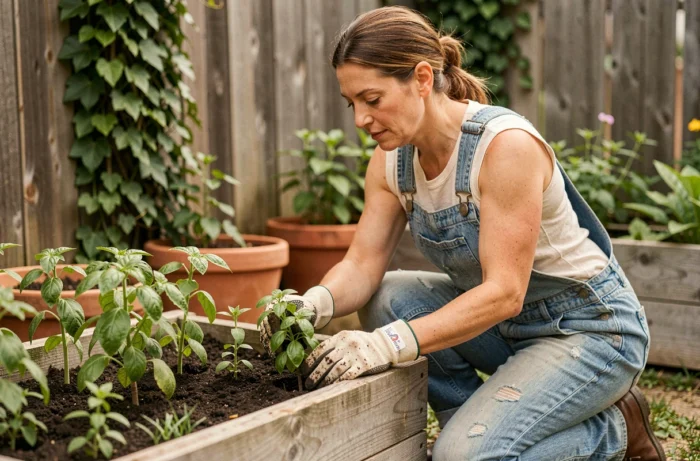
A thriving garden relies on three technical parameters: soil quality, water management, and the selection of plants suited to the local climate. Creating and maintaining a flourishing garden does not necessarily require more time, but rather more targeted actions, aligned with the rhythm of the seasons and the regulatory constraints now affecting watering in France.
Watering Restrictions: The Constraint That Changes Gardening
Since 2024, a significant portion of French territory is regularly placed under water usage restrictions. The national system operates at four levels: vigilance, alert, heightened alert, and crisis. From the alert level, watering of ornamental gardens is limited to specific time slots, often prohibited between 8 AM and 8 PM.
At the crisis level, watering of lawns and flower beds may be completely prohibited. These prefectural orders concern ornamental gardens, not necessarily vegetable gardens, but the distinction varies by department.
This reality forces a rethink of garden design itself. Focusing on drought-resistant species, installing thick mulch, and connecting a rainwater collector are no longer optional advice: they are survival conditions for an ornamental garden during the summer. Several guides detail these adaptations, and the resources from Jardinier.net provide in-depth techniques suited to each type of planting.

Living Soil: Understanding Your Soil Before Planting
The soil is not just a simple support. It is an ecosystem where bacteria, fungi, and earthworms transform organic matter into nutrients that can be absorbed by roots. Ignoring the nature of your soil is akin to planting blindly.
Identifying Soil Texture
A simple test involves taking a handful of moist soil and rolling it between your fingers. Clay soil forms a soft, sticky sausage. Sandy soil crumbles immediately. Silty soil feels like talcum powder.
Each texture imposes different cultivation choices. Clay retains water but compacts, while sand drains quickly but stores nothing. Most gardens present a mix, and that’s a good thing: a balanced soil (known as “loamy”) facilitates the gardener’s life.
Nourishing the Soil Rather Than the Plant
Adding mature compost to the surface, without burying it deeply, stimulates biological activity in the top few centimeters. This is where microbial life concentrates. Regular additions (in spring and autumn) gradually improve the structure, regardless of soil type.
Mulching complements compost by limiting evaporation, regulating soil temperature, and nourishing decomposer organisms. Dead leaves, chipped branches, straw: local organic matter is sufficient in most cases.
Choosing Plants: Prioritizing Adaptation to the Local Climate
A flourishing garden is not one that accumulates the most species, but one where each plant finds conditions close to its native environment. With the intensification of drought episodes, this principle becomes a priority selection criterion.
- Mediterranean perennials (lavender, sage, gaura) tolerate dry soils and require very little watering once established, even in a semi-oceanic climate.
- Ornamental grasses (miscanthus, stipa) structure a flower bed all year round and withstand weeks without rain.
- Deep-rooted shrubs (buddleia, eleagnus) capture moisture deep down and survive the summer without intervention.
- Ground cover plants (thyme, sedum) effectively replace traditional lawns in small areas, with almost no water needs.
Hardiness (the ability to withstand cold) and drought tolerance are two distinct factors. Checking both before any purchase avoids losses in the first season.

Seasonal Garden Maintenance: The Actions That Really Matter
Pruning, weeding, amending: classic maintenance is well documented. What makes the difference is the timing and precision of the action.
Spring: Prepare Without Rushing
The soil must be sufficiently warmed before any planting. Working with still cold and waterlogged soil destroys its structure. Waiting for spontaneous vegetation to restart is a reliable indicator: when weeds grow, the soil is ready.
This is also the time to install mulch on the beds, before the soil dries out, to retain the moisture accumulated during winter.
Summer: Saving Water in the Vegetable Garden and Garden
Watering in the evening (after 8 PM, if restrictions allow) limits evaporation. Deep and spaced watering is preferable to frequent and shallow applications: it forces the roots to go deeper to seek water, making the plants more resilient in the long run.
In the vegetable garden, drip irrigation remains the most economical method. A simple porous hose placed under the mulch significantly reduces water consumption compared to sprinkler watering.
Autumn and Winter: The Soil Prepares Silently
Autumn is the ideal season to plant trees and shrubs: roots settle during winter, without water stress. Plants planted in autumn establish better in the following spring than those planted in March or April.
In winter, avoiding walking on frozen flower beds protects the soil structure. It is also a good time to clean and sharpen tools: pruners, spades, and rakes last much longer when maintained each year.
A flourishing garden is built over several seasons, not in a weekend. Water restrictions, knowledge of the soil, and the choice of resilient plants form a triptych that every gardener benefits from mastering early, before the first heat puts their plantings to the test.